Child Safety Commitment Statement
Move Early Learning acknowledges that all children have the right to be safe and protecting children is a fundamental responsibility for the service, team members, families, and communities.
Child Protetion is our main priority.
Our Service is fully committed to creating a safe and supportive environment for al children and young people in our care.
We recognise our responsibility to uphold the National Safe Principles and to implement the child Safe Standards to enhance our ability to prevent and address allegations of child abuse.
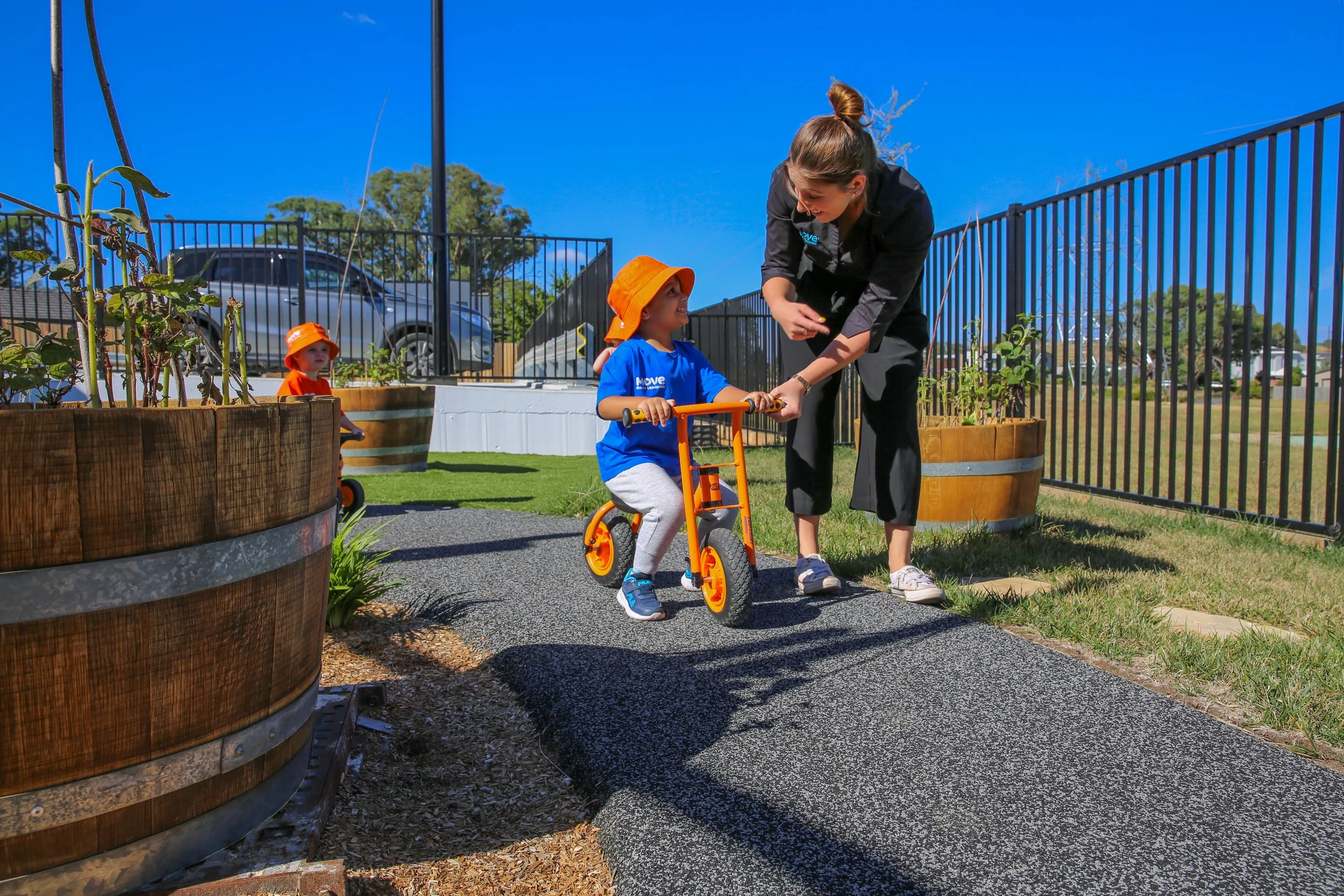
The Centre will:
Advocate the importance of child safety, wellbeing, and protection in the service and within the community.
Work collaboratively with child protection agencies, early childhood health agencies, family support services and the Office for Early Childhood Education and Care.
Ensure all team members have access to annual child protection and child safe training specific to the education and care sector.
Ensure all staff members have a valid, cleared and verified working with children check prior to commencing work.
All staff members participate in a thorough induction process prior to the commencement of employment, which includes a detailed overview of our service’s child protection policies and their responsibility for mandatory reporting obligations. Provide team members with cultural awareness training to assist in developing an understanding of cross-cultural child protection and child safe issues in Aboriginal and Torres Strait Islander and Culturally and Linguistically Diverse families.
Review child protection and child safe policy documents to ensure they reflect current best practice, recommended guidelines and legislation.
Record and report on child protection matters and incidents.
Ensure the importance of child protection, safety and wellbeing is highlighted in recruitment, selection, and induction processes.
Provide up to date information and any opportunity to training on the Child Safe Standards
All team members will:
Ensure protecting children, their safety and wellbeing are an integral part of all decision-making.
Treat all children with respect and be a positive role model in my conduct with them.
Use preventative and risk management strategies to minimise harm to children.
Raise the awareness of child protection matters with families and the community.
Participate in annual child protection and child safe training and maintain an understanding of the policy.
Respond quickly, fairly and transparently to any serios complaints made by any child or related to a child.
Only have physical contact with a child in ways which are appropriate to my professional or agreed roles and responsibilities.
Strive to continually improve child safety, wellness and protection prevention and management practices.
Report any incidents of child harm according to policy and legislation requirements immediately to centre management.
Follow all child safe and child protection policies to ensure child and family information is kept confidential.
Work collaboratively with families and support them in their parenting role and ensure that children receive any specialist support they require.
Respect, acknowledge and honour the diversity of children and families and ensure practices are inclusive and equitable, recognising the complex challenges that impact upon families.
Maintain an awareness and understanding of the cross-cultural issues relating to child abuse and neglect in Aboriginal and Torres Strait Islander and Culturally and Linguistically Diverse families.
Understand the professional, legal, and moral obligations in relation to protecting children.
Abide by the Mandatory Codde of Practise as part of the Children’s Guardian Regulation 2022.
Educators will:
Provide an education and care program that supports children’s physical, emotional, social, intellectual, cultural, and familial safety.
Ensure teaching practices promote child safety at all times and incorporate the Child Safe Standards
Empower and support children who may be experiencing difficulty in their lives with sensitivity, warmth and security.
Cater for the needs of children who require specialist intervention or have additional needs.
Ensure practices reflect a ‘strengths-based model’ that supports children and families and reflect the United Nations Convention on the Rights of the Child.
In line with the United Nations Convention on the Rights of the Child, we work to educate children about their right to safety and encourage them to speak up if they feel unsafe.
Empower children to express their views and concerns, ensuring their voices are heard and valued.
Liaise and collaborate with early intervention and prevention services to provide holistic services that work towards improving outcomes for all children and families.
Illness Exclusion Periods
To keep our children, families and educators healthy and safe, we follow recommended exclusion periods for common childhood illnesses. Please refer to the guide below when your child is unwell or undergoing medical treatment
COVID - 19: Exclude until fully recovered and fever-free for atleast 24 hours without the use of medication
Influenza: Exclude until fully recovered and fever-free for atleast 24 hours without the use of medication
Gastroenteritis (including vomiting and diarrhea): Exclude for atleast 24 hours from the last episode, if advised by ACT Health during an outbreak this may increase to 48 hours or more to reduce the spread
Fever (38C or above): Exclude until fever-free for 24 hours without medication and well enough to participate in all experiences
Conjunctivitis: Exclude until discharge has ended, or a doctor has confirmed it is no longer contagious
Hand, Foot and Mouth Disease: Exclude until all blisters have dried and child is well enough to participate in all experiences
Common Cold: Children may attend if symptoms are mild and they are well enough to participate in all experiences without the use of medicatin
Hepatitis A: Exclude for atleast 7 days after the onset of jaundice, or until medical clearance in provided
Chickenpox (Varicella): Exclude until all blisters have dried - usually 5 - 7 days from appearance of rash
Whooping Cough (Pertussis): Exclude for 21 days from onset of cough, or after 5 days of antibiotic treatment
School Sores (Impetigo): Excluded until medical clearance in provided to return